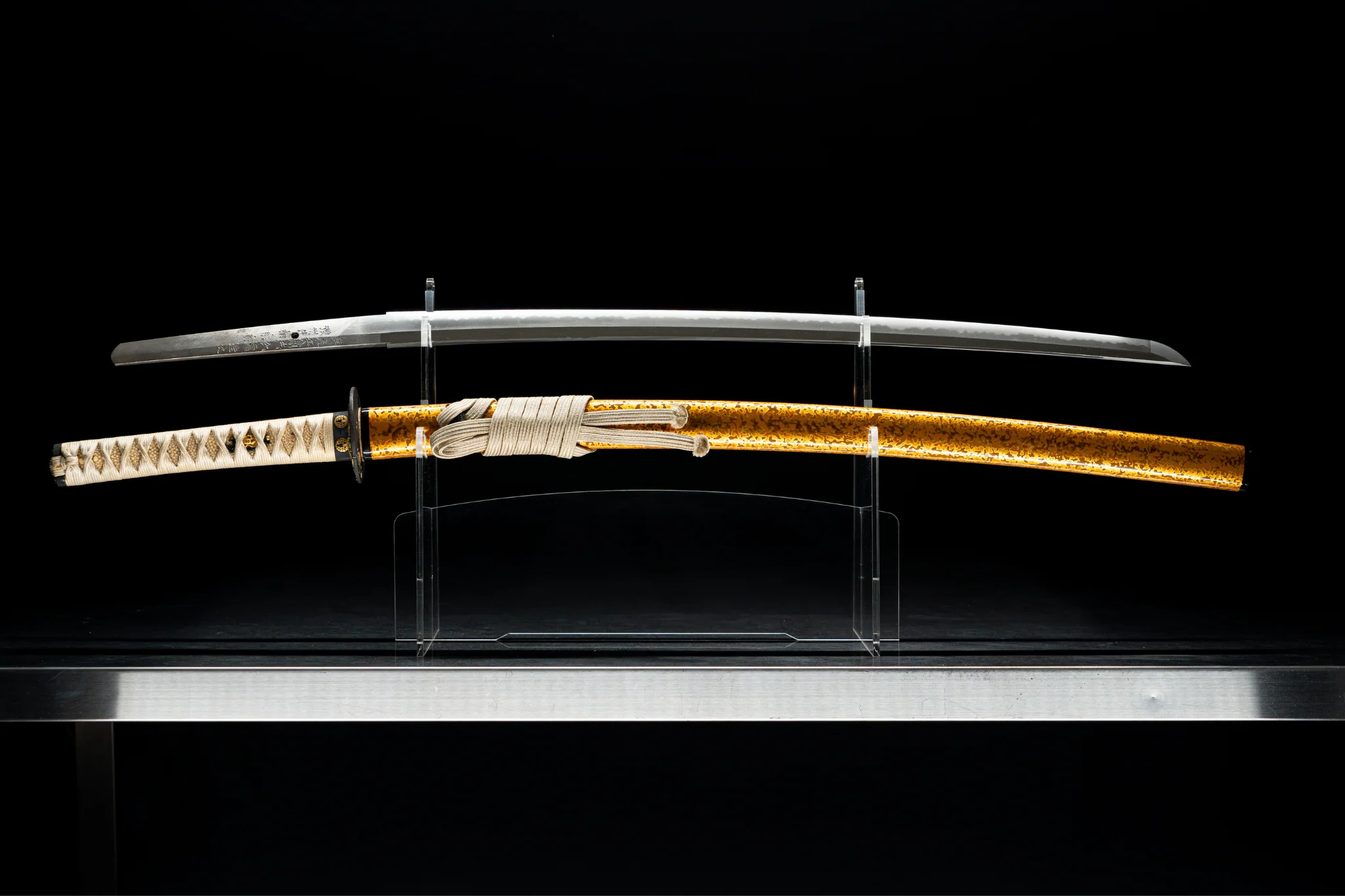
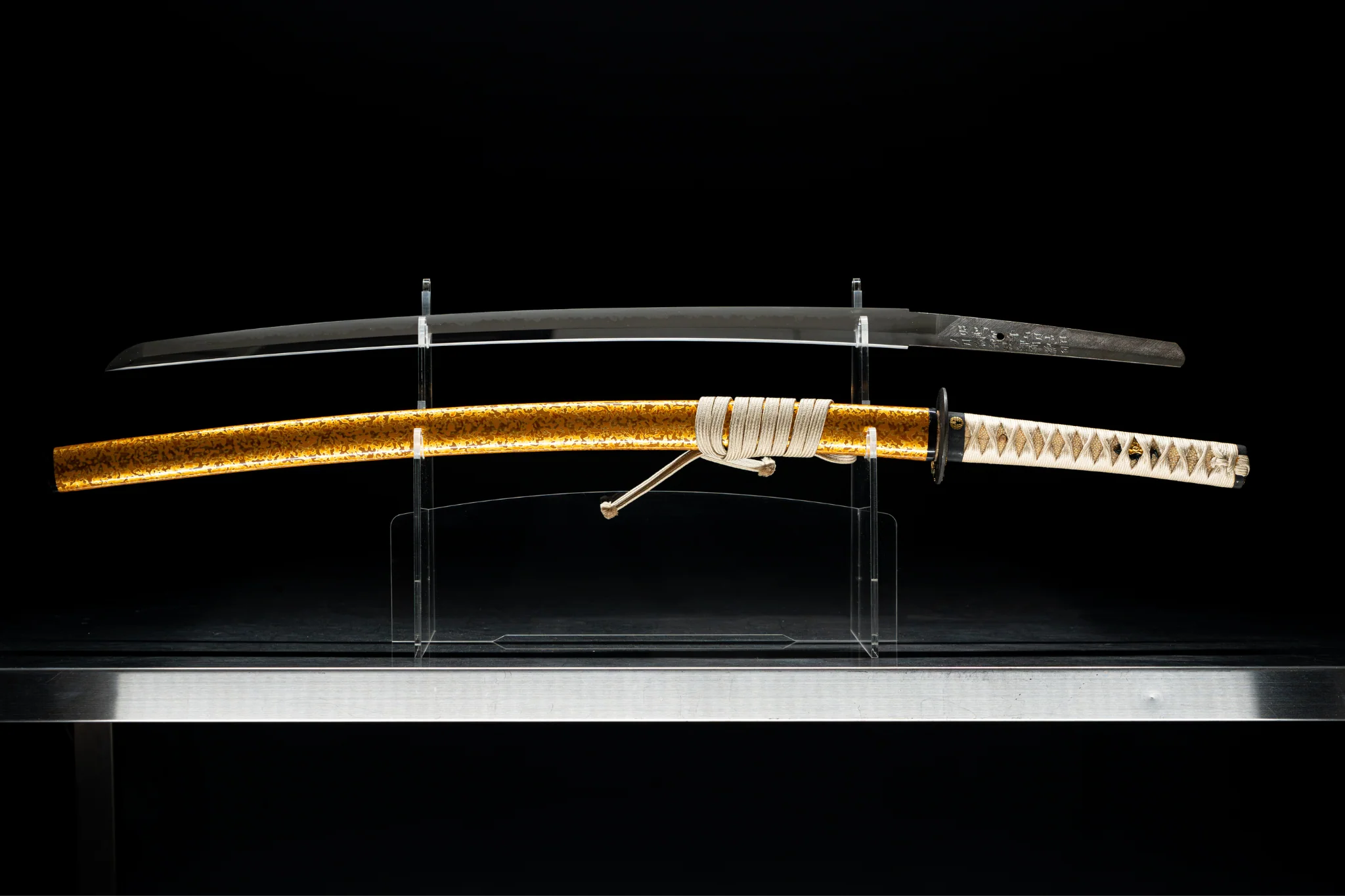
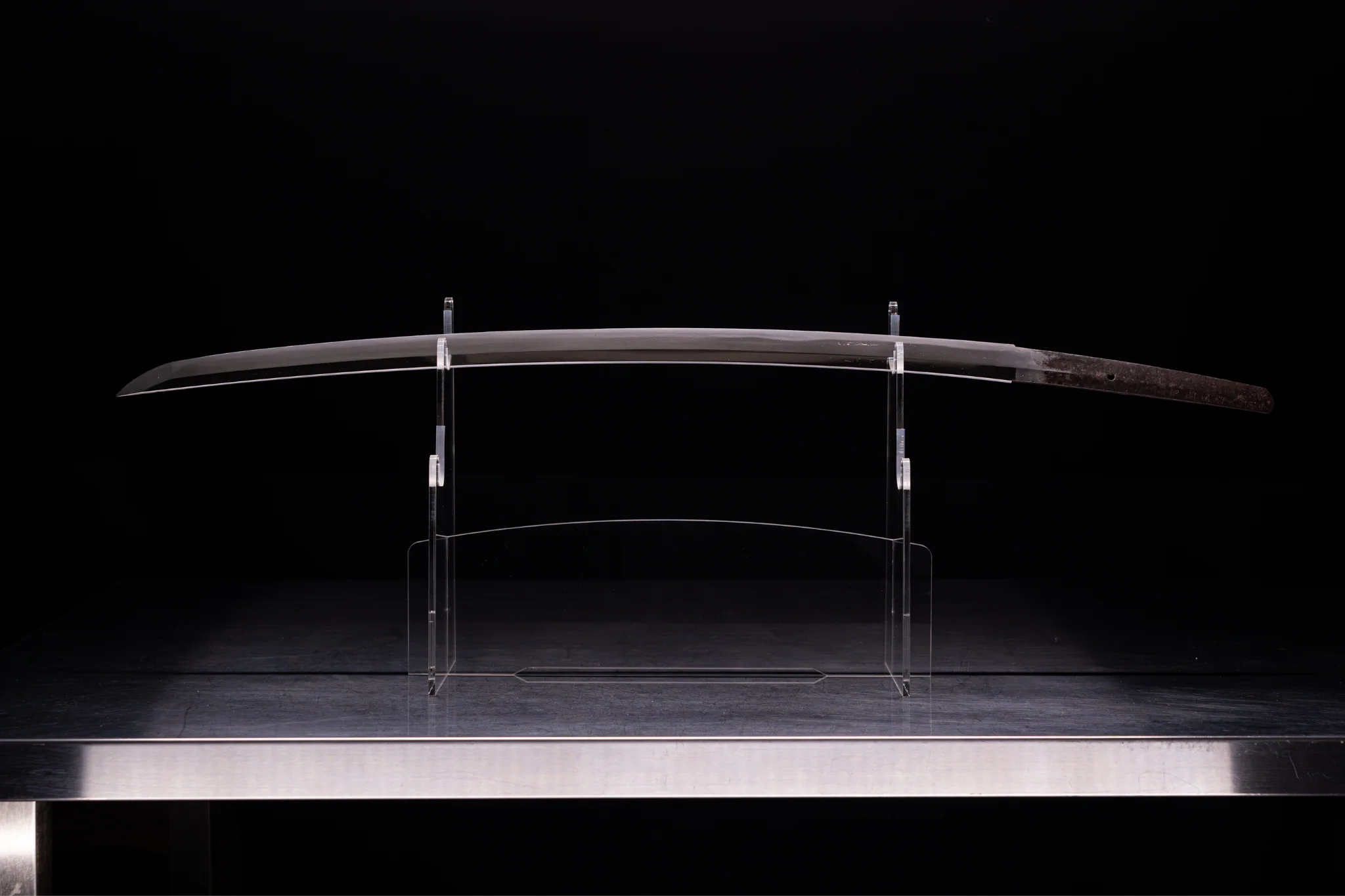
Antique Japanese Sword Katana Inaba no kuni Kanesaki
Specifications:
- Age : 1831, Tempo era (1830-1844)
- Location : Inaba
-
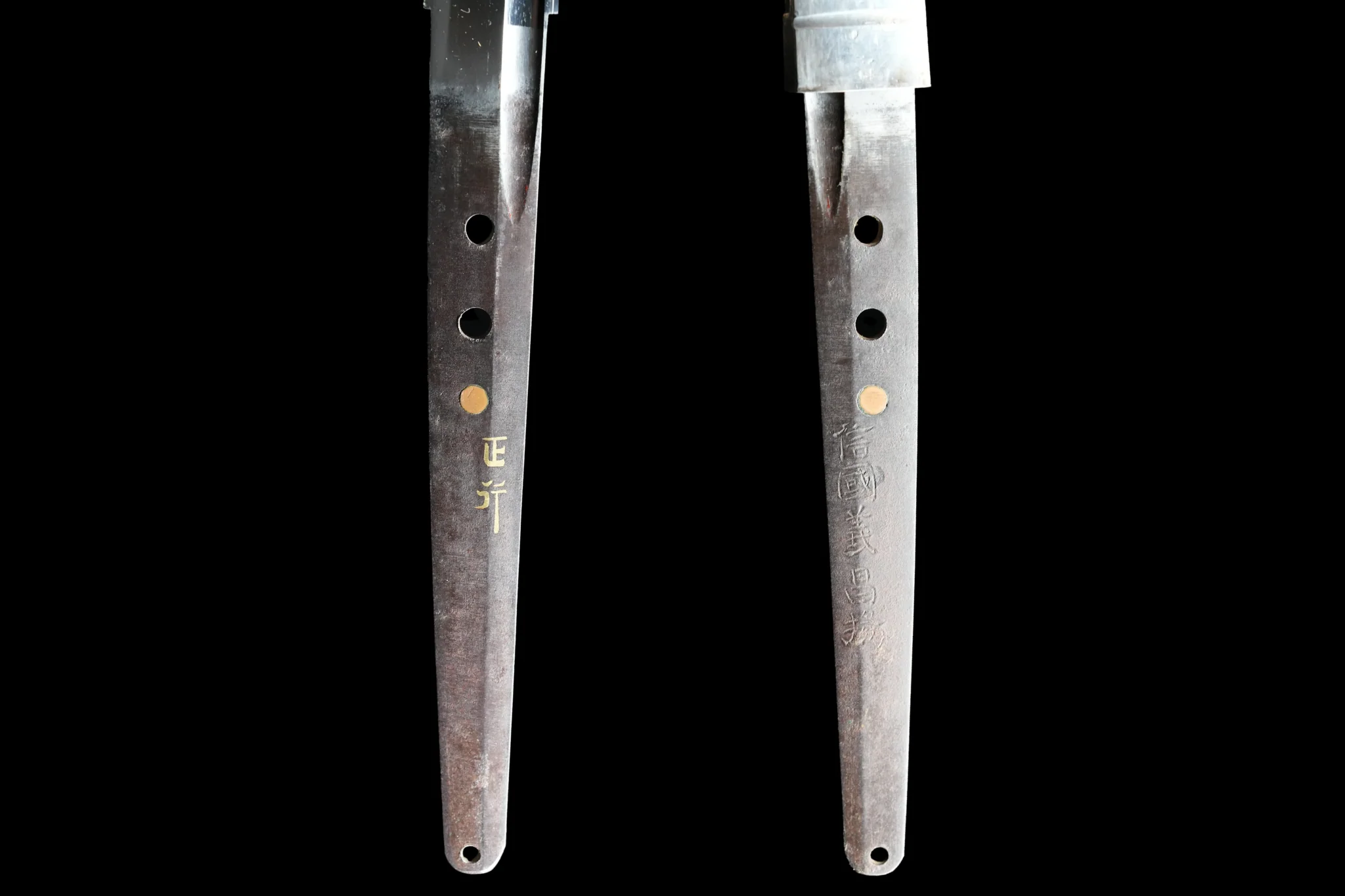
Swordsmith : (因幡国妙一峰雪入道兼先) Inaba no kuni Myoitsu Hosetsu Nyudo Kanesaki
- Length: 78.3 cm (30.83 inches)
- Curvature (Sori): 1.8 cm (0.71 inches)
- Mekugi-ana (peg hole): 1
- Moto-haba (Base width): 3.2 cm (1.26 inches)
- Moto-kasane (Base thickness): 0.9 cm (0.35 inches)
- Saki-haba (Tip width): 2.2 cm (0.87 inches)
- Saki-kasane (Tip thickness): 0.65 cm (0.26 inches)
- Scabbard (Sheath) Length: 110 cm (43.31 inches)
- Blade Weight: 1166.2 g (41.12 oz)
- Habaki Weight: 38.5 g (1.36 oz)
- Handle Weight: 193.5 g (6.82 oz)
- Handle Width: 28.5 cm (11.22 inches)
- Tsuba (Hand guard) Weight: 152.8 g (5.39 oz)
- Tsuba Height: 8.6 cm (3.39 inches)
- Tsuba Thickness: 0.45 cm (0.18 inches)
- Overall Length of the Sword with Handle: 114.5 cm (45.08 inches)
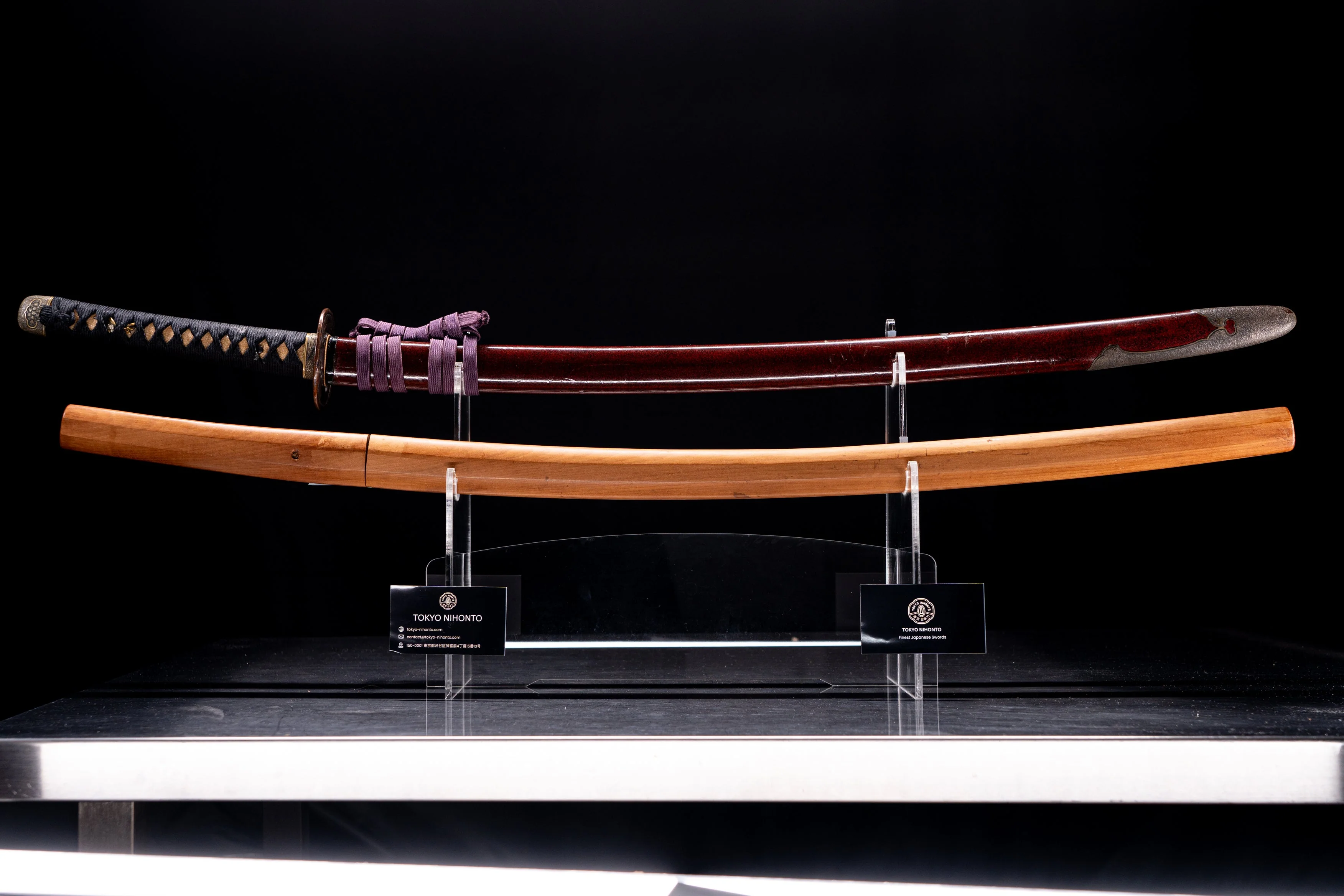
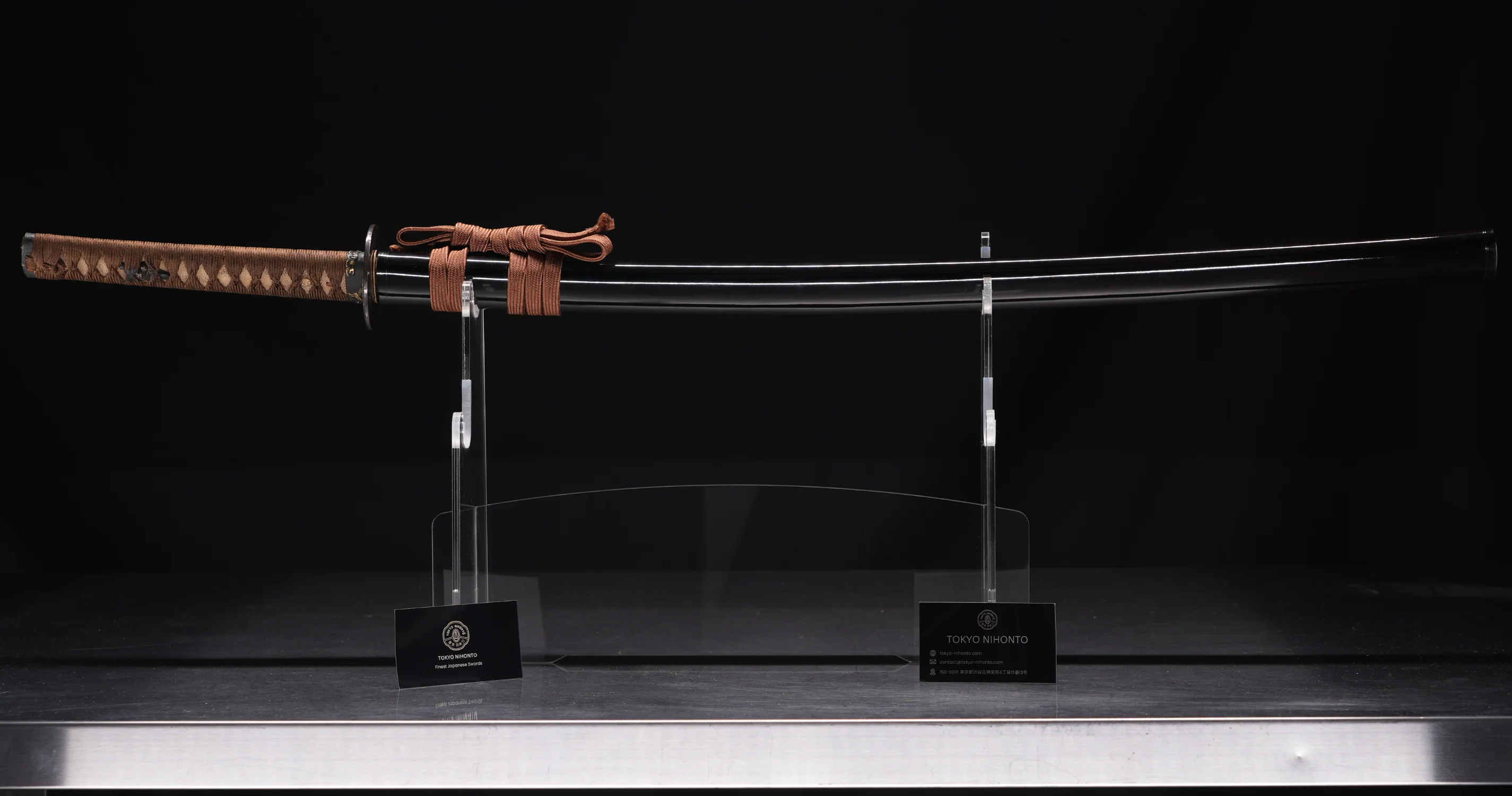
In the realm of Japanese blades, the Inaba no Kuni Myoitsu Hosetsu Nyudo Kanesaki represents a lineage of exceptional craftsmanship and historic significance. This magnificent blade from the esteemed Inaba domain, present-day Tottori prefecture, is a proud testament to the deep-rooted traditions of sword-making.
This blade, weighing an impressive 1166g (41.12 oz) and spanning slightly over 78.3 cm (30.83 inches), is a rare find. The white sheath, inscribed by Bizen-shi, ensures its authenticity and quality. Such swords, surpassing a kilogram in weight with an accompanying pristine sheath, are indeed a rarity. To possess a blade of this magnitude and significance is to own a piece of Japan's intricate history.
About Kanesaki:
The name "Kanesaki" resonates deeply in the annals of Japanese sword-making. Originating from Inaba, the title has been carried down through eight generations, from the Edo to the early Meiji period. This particular blade was crafted by the seventh-generation Kanesaki, whose birth name was Heki Yazaburo. He hailed from the Mino Kanesaki lineage, having apprenticed under Kanemoto during the late Muromachi period, in the early to mid-16th century.
The prestige and rarity of this blade, with its historical connections and superb craftsmanship, make it an invaluable addition to any collection.
Specifications:
- Age : 1831, Tempo era (1830-1844)
- Location : Inaba
-
Swordsmith : (因幡国妙一峰雪入道兼先) Inaba no kuni Myoitsu Hosetsu Nyudo Kanesaki
- Length: 78.3 cm (30.83 inches)
- Curvature (Sori): 1.8 cm (0.71 inches)
- Mekugi-ana (peg hole): 1
- Moto-haba (Base width): 3.2 cm (1.26 inches)
- Moto-kasane (Base thickness): 0.9 cm (0.35 inches)
- Saki-haba (Tip width): 2.2 cm (0.87 inches)
- Saki-kasane (Tip thickness): 0.65 cm (0.26 inches)
- Scabbard (Sheath) Length: 110 cm (43.31 inches)
- Blade Weight: 1166.2 g (41.12 oz)
- Habaki Weight: 38.5 g (1.36 oz)
- Handle Weight: 193.5 g (6.82 oz)
- Handle Width: 28.5 cm (11.22 inches)
- Tsuba (Hand guard) Weight: 152.8 g (5.39 oz)
- Tsuba Height: 8.6 cm (3.39 inches)
- Tsuba Thickness: 0.45 cm (0.18 inches)
- Overall Length of the Sword with Handle: 114.5 cm (45.08 inches)
In the realm of Japanese blades, the Inaba no Kuni Myoitsu Hosetsu Nyudo Kanesaki represents a lineage of exceptional craftsmanship and historic significance. This magnificent blade from the esteemed Inaba domain, present-day Tottori prefecture, is a proud testament to the deep-rooted traditions of sword-making.
This blade, weighing an impressive 1166g (41.12 oz) and spanning slightly over 78.3 cm (30.83 inches), is a rare find. The white sheath, inscribed by Bizen-shi, ensures its authenticity and quality. Such swords, surpassing a kilogram in weight with an accompanying pristine sheath, are indeed a rarity. To possess a blade of this magnitude and significance is to own a piece of Japan's intricate history.
About Kanesaki:
The name "Kanesaki" resonates deeply in the annals of Japanese sword-making. Originating from Inaba, the title has been carried down through eight generations, from the Edo to the early Meiji period. This particular blade was crafted by the seventh-generation Kanesaki, whose birth name was Heki Yazaburo. He hailed from the Mino Kanesaki lineage, having apprenticed under Kanemoto during the late Muromachi period, in the early to mid-16th century.
The prestige and rarity of this blade, with its historical connections and superb craftsmanship, make it an invaluable addition to any collection.
Description
Specifications:
- Age : 1831, Tempo era (1830-1844)
- Location : Inaba
-
Swordsmith : (因幡国妙一峰雪入道兼先) Inaba no kuni Myoitsu Hosetsu Nyudo Kanesaki
- Length: 78.3 cm (30.83 inches)
- Curvature (Sori): 1.8 cm (0.71 inches)
- Mekugi-ana (peg hole): 1
- Moto-haba (Base width): 3.2 cm (1.26 inches)
- Moto-kasane (Base thickness): 0.9 cm (0.35 inches)
- Saki-haba (Tip width): 2.2 cm (0.87 inches)
- Saki-kasane (Tip thickness): 0.65 cm (0.26 inches)
- Scabbard (Sheath) Length: 110 cm (43.31 inches)
- Blade Weight: 1166.2 g (41.12 oz)
- Habaki Weight: 38.5 g (1.36 oz)
- Handle Weight: 193.5 g (6.82 oz)
- Handle Width: 28.5 cm (11.22 inches)
- Tsuba (Hand guard) Weight: 152.8 g (5.39 oz)
- Tsuba Height: 8.6 cm (3.39 inches)
- Tsuba Thickness: 0.45 cm (0.18 inches)
- Overall Length of the Sword with Handle: 114.5 cm (45.08 inches)
In the realm of Japanese blades, the Inaba no Kuni Myoitsu Hosetsu Nyudo Kanesaki represents a lineage of exceptional craftsmanship and historic significance. This magnificent blade from the esteemed Inaba domain, present-day Tottori prefecture, is a proud testament to the deep-rooted traditions of sword-making.
This blade, weighing an impressive 1166g (41.12 oz) and spanning slightly over 78.3 cm (30.83 inches), is a rare find. The white sheath, inscribed by Bizen-shi, ensures its authenticity and quality. Such swords, surpassing a kilogram in weight with an accompanying pristine sheath, are indeed a rarity. To possess a blade of this magnitude and significance is to own a piece of Japan's intricate history.
About Kanesaki:
The name "Kanesaki" resonates deeply in the annals of Japanese sword-making. Originating from Inaba, the title has been carried down through eight generations, from the Edo to the early Meiji period. This particular blade was crafted by the seventh-generation Kanesaki, whose birth name was Heki Yazaburo. He hailed from the Mino Kanesaki lineage, having apprenticed under Kanemoto during the late Muromachi period, in the early to mid-16th century.
The prestige and rarity of this blade, with its historical connections and superb craftsmanship, make it an invaluable addition to any collection.